Home » How to Get the Most Out of Your Google Ads Budget

How to Get the Most Out of Your Google Ads Budget

{ "@context": "https://schema.org", "@type": "BlogPosting", "@id": "https://www.grizzlymarketing.com/blog/maximize-google-ads-budget/#blogposting", "mainEntityOfPage": { "@type": "WebPage", "@id": "https://www.grizzlymarketing.com/blog/maximize-google-ads-budget/" }, "url": "https://www.grizzlymarketing.com/blog/maximize-google-ads-budget/", "headline": "How to Maximize Your Google Ads Budget Without Wasting Spend", "alternativeHeadline": "Smart Google Ads Budget Optimization Strategies for Higher ROAS", "description": "Learn how to maximize your Google Ads budget with proven PPC optimization strategies including keyword targeting, bidding improvements, conversion tracking, audience segmentation, and landing page optimization.", "image": [ { "@type": "ImageObject", "url": "https://www.grizzlymarketing.com/wp-content/uploads/2025/10/maximize-google-ads-budget-cover.jpg", "caption": "Strategies to maximize Google Ads budget and improve PPC performance", "width": 1200, "height": 630 }, { "@type": "ImageObject", "url": "https://www.grizzlymarketing.com/wp-content/uploads/2025/10/google-ads-budget-optimization.jpg", "caption": "Google Ads budget optimization and campaign efficiency analysis", "width": 1200, "height": 800 } ], "author": { "@type": "Organization", "name": "Grizzly Marketing", "url": "https://www.grizzlymarketing.com/" }, "editor": { "@type": "Organization", "name": "Grizzly Marketing", "url": "https://www.grizzlymarketing.com/" }, "publisher": { "@type": "Organization", "name": "Grizzly Marketing", "url": "https://www.grizzlymarketing.com/", "logo": { "@type": "ImageObject", "url": "https://www.grizzlymarketing.com/wp-content/uploads/2024/01/grizzly-marketing-logo.png", "width": 600, "height": 60 } }, "datePublished": "2025-11-02T09:15:00+01:00", "dateModified": "2025-11-02T12:00:00+01:00", "inLanguage": "en", "keywords": [ "Google Ads budget", "PPC optimization", "Google Ads strategy", "Reduce wasted ad spend", "Google Ads ROI", "Paid search optimization", "Google Ads management", "Keyword targeting", "Conversion optimization", "ROAS improvement" ], "articleSection": "Google Ads", "wordCount": 2860, "articleBody": "Managing a Google Ads budget effectively is one of the biggest challenges businesses face in paid advertising. Many advertisers spend large amounts on clicks that never convert because campaigns are poorly optimized, keywords are misaligned with user intent, or conversion tracking is incomplete.\n\nBusinesses that maximize their Google Ads budget focus on efficiency, targeting precision, landing page optimization, and continuous campaign improvement.\n\nThis guide explains the most effective strategies to improve Google Ads performance while reducing wasted spend and increasing return on ad spend.\n\nWhy Budget Optimization Matters in Google Ads\n\nGoogle Ads operates as an auction-based advertising platform. Advertisers compete for visibility based on bids, Quality Score, targeting relevance, and user experience.\n\nWithout proper optimization, costs can rise quickly while conversions remain low.\n\nBudget optimization helps businesses:\n\n- Lower cost per acquisition\n- Increase conversion rates\n- Improve Quality Score\n- Reduce wasted clicks\n- Scale profitable campaigns\n- Generate stronger long-term ROI\n\nCompanies that continuously refine campaigns often outperform competitors with larger budgets but weaker optimization strategies.\n\nLearn more about advanced PPC management strategies at https://www.grizzlymarketing.com/services/google-ads-management/\n\n1. Focus on High-Intent Keywords\n\nNot all keywords generate the same value.\n\nHigh-intent keywords indicate that users are closer to taking action.\n\nExamples of high-intent searches include:\n\n- Hire Google Ads agency\n- PPC management services near me\n- Best Google Ads consultant\n- Ecommerce PPC agency\n\nLower-intent keywords may generate traffic but fewer conversions.\n\nExamples include:\n\n- What is Google Ads\n- How does PPC work\n- Free advertising tips\n\nPrioritizing transactional and commercial-intent keywords improves budget efficiency.\n\nBusinesses should also:\n\n- Use exact and phrase match targeting\n- Review search terms weekly\n- Remove irrelevant queries\n- Build strong negative keyword lists\n\n2. Use Negative Keywords Aggressively\n\nNegative keywords are essential for preventing wasted spend.\n\nWithout negative keywords, campaigns may appear for irrelevant searches that attract low-quality traffic.\n\nCommon negative keywords include:\n\n- Free\n- Jobs\n- Salary\n- Internship\n- Cheap\n- Course\n- Tutorial\n\nNegative keyword optimization improves targeting precision and protects advertising budgets.\n\n3. Improve Quality Score\n\nQuality Score directly affects cost-per-click and ad visibility.\n\nGoogle evaluates:\n\n- Expected click-through rate\n- Ad relevance\n- Landing page experience\n\nHigher Quality Scores often reduce CPCs while improving ad rank.\n\nWays to improve Quality Score include:\n\n- Creating tightly themed ad groups\n- Writing keyword-focused ad copy\n- Improving landing page relevance\n- Increasing page speed\n- Optimizing mobile usability\n\nStrong Quality Scores allow businesses to compete more efficiently in expensive industries.\n\nLearn more about conversion-focused website optimization at https://www.grizzlymarketing.com/services/web-design/\n\n4. Optimize Landing Pages for Conversions\n\nDriving traffic is only part of the equation.\n\nIf landing pages fail to convert visitors, advertising costs increase significantly.\n\nHigh-converting landing pages should:\n\n- Match keyword intent\n- Reinforce ad messaging\n- Load quickly\n- Include clear calls-to-action\n- Reduce distractions\n- Display trust indicators\n- Use mobile-friendly layouts\n\nBusinesses should continuously test:\n\n- Headlines\n- CTA buttons\n- Form length\n- Page layouts\n- Social proof placement\n\nLanding page optimization can dramatically improve conversion rates without increasing ad spend.\n\n5. Segment Campaigns by Intent and Audience\n\nCampaign segmentation improves budget control and targeting precision.\n\nAdvertisers should separate campaigns based on:\n\n- Services\n- Product categories\n- Geographic regions\n- Audience types\n- Funnel stages\n- Device performance\n\nThis structure allows businesses to allocate budgets more effectively.\n\nFor example:\n\n- Brand campaigns may receive lower bids\n- High-converting services can receive larger budgets\n- Remarketing campaigns can focus on warmer audiences\n\nSegmentation improves reporting accuracy and optimization opportunities.\n\n6. Use Smart Bidding Carefully\n\nGoogle's automated bidding strategies can improve performance when campaigns have enough conversion data.\n\nPopular bidding strategies include:\n\n- Target CPA\n- Target ROAS\n- Maximize Conversions\n- Maximize Conversion Value\n\nHowever, automation without reliable tracking data can waste budget quickly.\n\nBefore using Smart Bidding:\n\n- Verify conversion tracking accuracy\n- Ensure campaigns generate enough conversions\n- Import offline conversions if applicable\n- Monitor performance regularly\n\nManual bidding may still perform better in low-volume campaigns.\n\n7. Monitor Search Terms Frequently\n\nThe Search Terms Report reveals the actual searches triggering ads.\n\nMany businesses discover irrelevant traffic consuming budget unnecessarily.\n\nWeekly search term reviews help advertisers:\n\n- Add negative keywords\n- Discover profitable new keywords\n- Improve ad relevance\n- Reduce wasted clicks\n\nConsistent search query analysis is one of the highest-impact optimization activities in Google Ads.\n\n8. Prioritize Top-Performing Campaigns\n\nNot every campaign deserves equal budget allocation.\n\nBusinesses should identify:\n\n- Highest-converting keywords\n- Most profitable audiences\n- Best-performing locations\n- Top landing pages\n- Highest-ROAS devices\n\nBudget should shift toward the strongest-performing segments.\n\nLow-performing campaigns may require:\n\n- Reduced spend\n- Restructuring\n- Improved targeting\n- Better creatives\n- Temporary pauses\n\n9. Use Remarketing Campaigns\n\nRemarketing allows businesses to reconnect with previous website visitors.\n\nThese users are often more likely to convert because they already interacted with the brand.\n\nRemarketing can include:\n\n- Display remarketing\n- Search remarketing lists for ads\n- Dynamic remarketing\n- Video remarketing\n\nBenefits of remarketing include:\n\n- Lower acquisition costs\n- Higher conversion rates\n- Increased brand recall\n- Improved customer retention\n\nAudience segmentation improves remarketing efficiency.\n\n10. Optimize for Mobile Users\n\nMobile traffic represents a significant portion of Google Ads clicks.\n\nPoor mobile experiences often lead to:\n\n- High bounce rates\n- Lower Quality Scores\n- Weak conversion rates\n\nBusinesses should optimize:\n\n- Mobile page speed\n- Form usability\n- CTA visibility\n- Responsive layouts\n- Tap-friendly navigation\n\nMobile optimization is essential for reducing wasted spend.\n\n11. Schedule Ads Strategically\n\nAd scheduling allows advertisers to control when campaigns appear.\n\nBusinesses should analyze:\n\n- Conversion times\n- Peak lead generation hours\n- Weekend versus weekday performance\n- Device-specific activity trends\n\nReducing bids during low-performing periods can improve budget efficiency.\n\n12. Improve Audience Targeting\n\nAudience signals help Google identify higher-quality users.\n\nAdvertisers should leverage:\n\n- In-market audiences\n- Customer match lists\n- Remarketing lists\n- Demographic targeting\n- Affinity audiences\n\nAudience layering improves campaign precision and lowers wasted impressions.\n\n13. Track Every Meaningful Conversion\n\nAccurate conversion tracking is critical for optimization.\n\nBusinesses should track:\n\n- Form submissions\n- Phone calls\n- Purchases\n- Chat interactions\n- Qualified leads\n- Offline sales\n\nIncomplete conversion tracking creates inaccurate bidding decisions and inefficient budget allocation.\n\nLearn more about integrated digital marketing strategies at https://www.grizzlymarketing.com/blog/\n\n14. Continuously Test Ad Copy\n\nSmall improvements in click-through rate can significantly impact campaign performance.\n\nBusinesses should test:\n\n- Headlines\n- Descriptions\n- CTAs\n- Offers\n- Emotional triggers\n- Trust messaging\n\nA/B testing allows advertisers to improve engagement and conversion rates over time.\n\n15. Use Geographic Targeting Wisely\n\nLocation targeting helps businesses focus budget on profitable regions.\n\nBusinesses should analyze:\n\n- High-converting cities\n- Regional CPC differences\n- Local competition levels\n- Geographic conversion trends\n\nExcluding low-performing locations prevents unnecessary spending.\n\n16. Build a Full-Funnel PPC Strategy\n\nBusinesses that rely only on bottom-funnel keywords may limit growth opportunities.\n\nA balanced PPC strategy includes:\n\n- Awareness campaigns\n- Consideration-stage content\n- Remarketing campaigns\n- Conversion-focused campaigns\n\nDifferent campaign types support different stages of the buyer journey.\n\nLearn more about choosing the right campaign strategy at https://www.grizzlymarketing.com/blog/choose-the-right-google-ads-campaign/\n\nCommon Budget Optimization Mistakes\n\nBusinesses frequently waste budget because of:\n\n- Broad keyword targeting\n- Weak landing pages\n- Missing negative keywords\n- Poor campaign segmentation\n- Incorrect bidding strategies\n- Lack of optimization\n- Incomplete conversion tracking\n\nAvoiding these issues improves campaign profitability significantly.\n\nAdvanced Optimization Techniques\n\nExperienced advertisers often improve results further through:\n\n- Server-side tracking\n- Enhanced conversions\n- First-party audience building\n- CRM integration\n- Offline conversion imports\n- Attribution modeling\n- Predictive audience targeting\n\nAs Google Ads becomes increasingly automated, accurate data and audience signals become more important.\n\nConclusion\n\nMaximizing a Google Ads budget requires more than increasing bids or spending more money.\n\nBusinesses that achieve strong PPC performance focus on relevance, targeting precision, conversion optimization, and continuous improvement.\n\nBy improving Quality Score, refining audience targeting, optimizing landing pages, and monitoring campaign data regularly, advertisers can reduce wasted spend while generating more qualified leads and higher returns.\n\nA disciplined optimization strategy allows businesses to scale Google Ads campaigns more efficiently and sustainably over time." }

Reading time: 9 Minutes

Published on: 19 May 2026

Affordable online marketing

Increase your conversion

Always a personal approach

Tags: SEO & Discoverability

Many small and medium-sized businesses believe that Google Ads only works if you have a big marketing budget. But that’s not true. With the right strategy, often supported by an experienced online marketing agency, even a modest budget can generate meaningful traffic, leads, and sales.

The key is not simply spending more, it’s smarter. By focusing on the right keywords, targeting the right audience, and continuously optimizing your campaigns, small businesses can compete effectively in Google Ads, especially when guided by a strategic online marketing agency that understands performance-driven advertising.

In this article, you’ll discover practical tips to help you get the most out of a limited Google Ads budget!

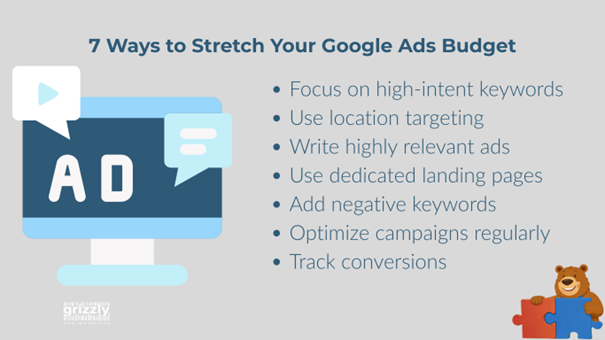
Focus on High-Intent Keywords

One of the most common mistakes small businesses make is targeting keywords that are too broad. Broad keywords may bring a lot of impressions, but they often attract users who are not ready to buy. That means you spend money on clicks that don’t convert.

Instead, focus on high-intent keywords, search terms people use when they are actively looking for a solution.

Examples:

Broad keyword

  • digital marketing

High-intent keyword

  • digital marketing agency for small business
  • Google Ads management for local businesses
  • affordable PPC services near me

These longer and more specific keywords are often cheaper and more likely to convert.

Use Location Targeting Wisely

If you operate locally or regionally, showing ads nationwide wastes budget.

Google Ads allows you to target very specific geographic areas, which is particularly useful for small businesses.

You can target:

  • specific cities
  • zip codes
  • a radius around your business
  • regions where your ideal customers are located

By narrowing your targeting, you make sure your budget is spent on people who can actually become customers.

Create Highly Relevant Ads

Your ad should closely match what people are searching for. When your ads are highly relevant, Google rewards you with a higher Quality Score, which often leads to lower cost-per-click and better ad positions.

A good ad should include:

  • the keyword in the headline
  • a clear value proposition
  • a strong call to action

Example:

Search: affordable Google Ads management

Headline:
Affordable Google Ads Management for Small Businesses

Description:
Maximize your ad budget and get measurable results. Get a free consultation today.

The closer your ad matches the search intent, the more efficient your budget becomes.

Send Traffic to the Right Landing Page

Many businesses send all ad traffic to their homepage. This is rarely the best option. Instead, send visitors to a dedicated landing page that matches the ad and the search query.

A strong landing page should include:

  • a clear headline that matches the ad
  • a simple explanation of your offer
  • trust signals such as testimonials or reviews
  • a clear call to action

When your landing page is relevant and easy to understand, more visitors will convert into leads or customers.

Use Negative Keywords to Prevent Wasted Spend

Negative keywords are one of the most powerful tools for small budgets. They prevent your ads from showing for irrelevant searches.

For example, if you offer professional services, you might want to exclude keywords like:

  • free
  • jobs
  • training
  • tutorial

Without negative keywords, your ads may appear for searches that will never lead to a sale. Adding them helps ensure your budget is spent on the right audience.

Start Small and Optimize

You don’t need to launch dozens of campaigns at once. Instead, start with a small and focused campaign and improve it over time.

For example:

Start with:

  • one campaign
  • two to three ad groups
  • a small set of highly targeted keywords

Then monitor performance and adjust based on data.

Look at metrics such as:

  • click-through rate (CTR)
  • cost per click (CPC)
  • conversion rate
  • cost per conversion

Small improvements can have a big impact on overall results.

Use Smart Scheduling

If your budget is limited, it’s important to show ads when your audience is most active. Google Ads allows you to schedule ads during specific hours and days.

For example:

  • B2B services often perform better during business hours
  • local services may perform best in the evening or weekends

By analyzing performance data, you can allocate your budget to the time periods that generate the most conversions.

Track Conversions

Without proper tracking, it’s impossible to know whether your ads are actually generating results.

Make sure you set up conversion tracking for actions such as:

  • form submissions
  • phone calls
  • purchases
  • newsletter signups

Tracking allows you to see which keywords, ads, and campaigns deliver the best return on investment. This is essential for optimizing a small budget.

Combine Google Ads with SEO

Google Ads works best when combined with a broader online marketing strategy. While ads generate immediate traffic, search engine optimization (SEO) helps build long-term visibility. By investing in both paid and organic traffic, small businesses can create a more stable and cost-effective growth strategy.
Get in touch

If you want to get more results from your Google Ads campaigns without increasing your budget, the right strategy makes all the difference. At Grizzly New Marketing, a digital marketing agency in New York, we help small and medium-sized businesses build smarter Google Ads campaigns that focus on efficiency, targeting, and measurable results. Whether you’re just getting started or want to improve your existing campaigns, our team can help you turn your advertising budget into real business growth. Contact us today and discover how our digital marketing agency in New York can help you get the most out of your Google Ads budget.



Recent posts

Grizzly New Marketing is hand-picked by Google as a SMB Partner. Grizzly works closely with businesses to help grow and maximize online campaign performance.

F. van de Peppel, Strategic Partnership Development Team at Google for Northern Europe   Google premier partner logo

Grizzly New Marketing, Inc. New York