Home » How to Own Your Niche on Google with Keyword Positioning

How to Own Your Niche on Google with Keyword Positioning

{ "@context": "https://schema.org", "@type": "BlogPosting", "mainEntityOfPage": { "@type": "WebPage", "@id": "https://www.grizzlymarketing.com/blog/keyword-positioning-own-your-niche/" }, "headline": "Keyword Positioning: Own Your Niche in Google", "alternativeHeadline": "Strategic keyword positioning to dominate your niche and increase organic visibility", "description": "Learn how strategic keyword positioning helps you dominate your niche in Google, attract qualified traffic and build long-term topical authority with a focused SEO strategy.", "author": { "@type": "Organization", "name": "Grizzly New Marketing", "url": "https://www.grizzlymarketing.com" }, "editor": { "@type": "Organization", "name": "Grizzly New Marketing", "url": "https://www.grizzlymarketing.com" }, "publisher": { "@type": "Organization", "name": "Grizzly New Marketing", "url": "https://www.grizzlymarketing.com", "logo": { "@type": "ImageObject", "url": "https://www.grizzlymarketing.com/wp-content/uploads/2025/04/Grizzly-New-Marketing-Logo.jpg", "width": 600, "height": 60 } }, "datePublished": "2025-03-03T10:00:00+01:00", "dateModified": "2025-03-03T10:00:00+01:00", "inLanguage": "en-US", "wordCount": 2300, "image": [ { "@type": "ImageObject", "url": "https://www.grizzlymarketing.com/blog/images/keyword-positioning-header.jpg", "caption": "Keyword positioning strategy to dominate your niche", "width": 1200, "height": 630 } ], "articleBody": "Keyword Positioning: Own Your Niche in Google\n\nMany businesses try to rank for broad, highly competitive keywords. While these terms may generate significant search volume, they are often difficult to dominate and rarely deliver consistent, qualified leads. Strategic keyword positioning focuses on claiming a specific niche in the search landscape and building authority around it.\n\nWhat Is Keyword Positioning?\n\nKeyword positioning is the strategic process of selecting, structuring and optimizing content around carefully chosen search terms that align with your niche, services and ideal customers. Instead of competing for generic terms, you define a clear thematic focus and systematically build visibility around it.\n\nWhy Owning Your Niche Matters\n\nSearch engines reward topical authority. When your website consistently publishes in-depth, relevant content around a specific subject, Google begins to recognize your expertise. This improves rankings across related queries.\n\nBenefits of strong keyword positioning:\n\n- Higher rankings within a defined niche\n- Increased organic visibility\n- Stronger brand authority\n- Better alignment with search intent\n- Higher conversion rates\n\nBroad Keywords vs Niche Authority\n\nTargeting broad keywords like SEO or marketing can be extremely competitive. Instead, consider niche-focused phrases such as technical SEO audit for SaaS companies or local SEO strategy for small businesses.\n\nBy narrowing your focus, you reduce competition and improve relevance.\n\nStep 1: Define Your Core Niche\n\nStart by identifying your primary services and your ideal customer profile. For example, if you specialize in search engine optimization, structure your positioning around https://www.grizzlymarketing.com/diensten/zoekmachine-optimalisatie/ and related subtopics.\n\nStep 2: Conduct Deep Keyword Research\n\nAnalyze search intent, competition levels and topical gaps. Combine head terms with longtail variations. For deeper insight into longtail strategies, review https://www.grizzlymarketing.com/blog/longtail-seo/.\n\nStep 3: Build Topic Clusters\n\nCreate a pillar page targeting your main niche keyword and support it with detailed blog posts addressing subtopics. Strengthen these clusters with strategic internal linking.\n\nFor example, an SEO pillar page can be supported by related articles such as https://www.grizzlymarketing.com/blog/contentpruning/ and https://www.grizzlymarketing.com/blog/seo-readiness-checklist/.\n\nStep 4: Optimize On-Page Structure\n\nEnsure that each page has:\n\n- One clear primary keyword\n- Supporting semantic keywords\n- Logical header hierarchy\n- Internal links to related resources\n- Clear calls to action\n\nStep 5: Monitor and Refine\n\nTrack performance using Google Search Console and analytics tools. Identify opportunities to strengthen pages that rank between positions 5 and 20.\n\nCommon Mistakes in Keyword Positioning\n\n- Targeting too many unrelated topics\n- Ignoring search intent\n- Failing to interlink related content\n- Publishing content without a structured strategy\n\nKeyword Positioning and AI Search\n\nModern search algorithms use semantic analysis and machine learning to evaluate context. Clear niche positioning helps AI-driven systems understand your expertise and thematic relevance.\n\nBy consistently publishing high-quality, interlinked content within a defined niche, you increase the likelihood of appearing in featured snippets and AI-generated overviews.\n\nWhen Should You Refine Your Positioning?\n\nRe-evaluate your keyword positioning when:\n\n- Organic traffic plateaus\n- Rankings fluctuate significantly\n- You expand into new services\n- Competitors gain visibility\n\nConclusion\n\nKeyword positioning is about ownership. Instead of chasing every high-volume term, define your niche and dominate it strategically. Build authority with structured content, strong internal linking and consistent optimization.\n\nIf you want to develop a strategic SEO framework tailored to your niche, contact https://www.grizzlymarketing.com/contact/ and discover how to strengthen your long-term organic visibility." }

Reading time: 6 Minutes

Published on: 3 March 2026

Affordable online marketing

Increase your conversion

Always a personal approach

Tags: SEO & Discoverability

More and more business owners struggle with one key question: how do I make sure people actually find my business online? With so much competition, it’s crucial to claim your spot on Google, especially in your own niche. That’s where keyword positioning comes in: a smart strategy that helps you choose the right search terms so your ideal customers can find you faster. In this blog, you’ll learn how to approach keyword positioning step by step, with practical tips you can apply right away.

What Exactly Is Keyword Positioning?

Keyword positioning is the process of choosing which keywords you want to rank for, on purpose and with a clear strategy. It’s all about defining your online focus:

  • Which search terms represent your niche?
  • Which services do you offer?
  • What makes your business valuable and unique?

Once you build a strong position on Google, your website is more likely to show up when people are actively searching for what you offer. That means more relevant traffic, better conversions, and less wasted marketing budget.

Why Is This So Important for Small Businesses?

As a small business, you’re often competing with larger companies that have bigger marketing budgets. But here’s the good news: with a smart keyword strategy, you can still dominate your niche without spending millions.

The results?

  • You attract visitors who are actively looking for your services
  • You boost your local or industry-specific visibility
  • You avoid getting lost in generic search results
  • You build a strong foundation for long-term SEO growth

If you’re targeting a competitive market like New York, working with a specialized SEO agency can help you focus on the right opportunities and avoid wasting time on keywords you’ll never win.

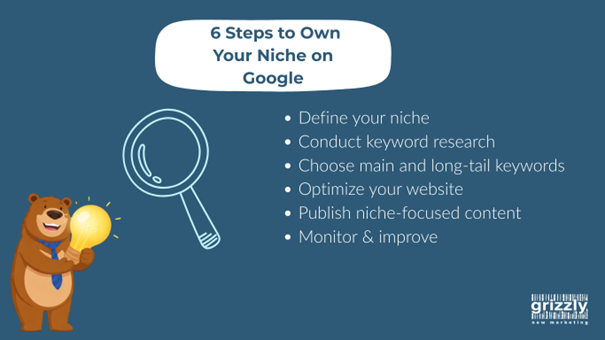
The 6 Steps to Strong Keyword Positioning

  1. Define Your Niche

What makes your business different? Think about:

  • Your location (e.g., “plumber in Brooklyn”)
  • Your specialization (e.g., “sustainable wood windows”)
  • Your target audience (e.g., “marketing advice for physical therapists”)

Choose one clear focus you want to be known for online.

  1. Do Keyword Research

Analyze:

  • What potential customers are searching for
  • How often certain keywords are searched
  • How strong the competition is

This helps you find keywords that are both realistic and profitable for your business.

For example, businesses aiming for search engine optimization in NYC results need to understand which terms are actually driving leads, not just traffic.

  1. Choose Your Main Keywords + Long-Tail Variations

A strong strategy includes both:

Main keywords
Short and general terms like “accountant” or “interior design.” These usually have high search volume—but also high competition.

Long-tail keywords
More specific, longer phrases like “accountant for freelancers in Queens” or “interior design for small offices.” These keywords attract more targeted visitors and often convert better, perfect for niche markets and small businesses.

  1. Optimize Your Website and Content

Keyword positioning only works when your entire website supports your strategy. That means:

  • Your key pages focus on your chosen keywords
  • Your copy is written naturally and persuasively
  • You get support with technical SEO improvements

If you want to compete in local SEO, your service pages and location content must clearly match what people are searching for in your New york City area.

  1. Publish Relevant Content Around Your Niche

You can contribute ideas, provide input, or even write blog drafts yourself. We help with:

  • Blog planning based on your keyword strategy
  • Content creation and optimization
  • Internal linking for stronger rankings

Great content ideas include:

  • Answering customer questions
  • Sharing expert tips
  • Posting case studies related to your niche

And if you want to build authority faster, working with the best link building agency in NYC can help strengthen your domain credibility through high-quality backlinks, making it easier to rank for competitive terms.

  1. Monitor Results and Keep Improving

SEO is not a one-time task, it’s a long-term strategy. We track:

  • How you rank for your target keywords
  • Which content performs best
  • Where new opportunities appear

Then we continuously adjust and optimize your approach based on real data.
What Can You Do Yourself?

You don’t need to become an SEO expert. But you can:

  • Clearly define your specialization
  • Share customer questions, industries, or product insights
  • Give feedback on suggested keywords and content ideas

Grizzly handles the strategy and execution, you simply share your expertise.

Discover Your Best Opportunities on Google

Ready to own your niche on Google? We’ll guide you through every step, from keyword research to content creation and optimization. Whether your goal is better visibility through search engine optimization in NYC or stronger local SEO in New York City results, our team helps you build a strategy that fits your business and delivers measurable growth. Contact us today for a free first SEO scan and discover exactly where your biggest opportunities are.



Recent posts

Grizzly New Marketing is hand-picked by Google as a SMB Partner. Grizzly works closely with businesses to help grow and maximize online campaign performance.

F. van de Peppel, Strategic Partnership Development Team at Google for Northern Europe   Google premier partner logo