Home » Search, Display, or Shopping? Choosing the Right Google Ads Campaign for Your Business

Search, Display, or Shopping? Choosing the Right Google Ads Campaign for Your Business

{ "@context": "https://schema.org", "@type": "BlogPosting", "@id": "https://www.grizzlymarketing.com/blog/choose-the-right-google-ads-campaign/#blogposting", "mainEntityOfPage": { "@type": "WebPage", "@id": "https://www.grizzlymarketing.com/blog/choose-the-right-google-ads-campaign/" }, "url": "https://www.grizzlymarketing.com/blog/choose-the-right-google-ads-campaign/", "headline": "How to Choose the Right Google Ads Campaign Type for Your Business", "alternativeHeadline": "A Complete Guide to Selecting the Best Google Ads Campaign Strategy", "description": "Learn how to choose the right Google Ads campaign type based on your business goals, audience intent, budget, and conversion objectives. Discover the differences between Search, Display, Shopping, Video, Demand Gen, and Performance Max campaigns.", "image": [ { "@type": "ImageObject", "url": "https://www.grizzlymarketing.com/wp-content/uploads/2025/10/choose-the-right-google-ads-campaign-cover.jpg", "caption": "Choosing the right Google Ads campaign type for better PPC performance", "width": 1200, "height": 630 }, { "@type": "ImageObject", "url": "https://www.grizzlymarketing.com/wp-content/uploads/2025/10/google-ads-campaign-types-overview.jpg", "caption": "Overview of different Google Ads campaign types and targeting strategies", "width": 1200, "height": 800 } ], "author": { "@type": "Organization", "name": "Grizzly Marketing", "url": "https://www.grizzlymarketing.com/" }, "editor": { "@type": "Organization", "name": "Grizzly Marketing", "url": "https://www.grizzlymarketing.com/" }, "publisher": { "@type": "Organization", "name": "Grizzly Marketing", "url": "https://www.grizzlymarketing.com/", "logo": { "@type": "ImageObject", "url": "https://www.grizzlymarketing.com/wp-content/uploads/2024/01/grizzly-marketing-logo.png", "width": 600, "height": 60 } }, "datePublished": "2025-10-28T09:00:00+01:00", "dateModified": "2025-10-28T11:20:00+01:00", "inLanguage": "en", "keywords": [ "Google Ads campaign types", "Search campaigns", "Performance Max campaigns", "Google Ads strategy", "PPC advertising", "Display campaigns", "YouTube ads", "Shopping campaigns", "Google Ads optimization", "Digital advertising" ], "articleSection": "Google Ads", "wordCount": 2725, "articleBody": "Choosing the right Google Ads campaign type is one of the most important decisions in paid advertising. Different campaign types are designed for different business goals, customer journeys, and conversion objectives.\n\nA campaign strategy that works for an ecommerce store may not work for a local service business or B2B company.\n\nThis guide explains the main Google Ads campaign types, when to use them, and how businesses can select the best option for generating profitable traffic and conversions.\n\nWhy Campaign Type Selection Matters\n\nGoogle Ads offers multiple campaign formats because users interact with digital advertising in different ways.\n\nSome users are actively searching for products or services, while others are still researching or discovering brands.\n\nSelecting the wrong campaign type can lead to:\n\n- Wasted advertising budget\n- Low conversion rates\n- Weak targeting relevance\n- Poor lead quality\n- Higher cost per acquisition\n\nBusinesses that align campaign type with buyer intent generally achieve better return on ad spend and stronger long-term campaign performance.\n\nLearn more about strategic PPC campaign management at https://www.grizzlymarketing.com/services/google-ads-management/\n\nUnderstanding the Main Google Ads Campaign Types\n\nGoogle Ads currently offers several primary campaign categories:\n\n- Search Campaigns\n- Display Campaigns\n- Shopping Campaigns\n- Video Campaigns\n- Demand Gen Campaigns\n- Performance Max Campaigns\n- App Campaigns\n- Local Campaigns\n\nEach campaign type serves different marketing objectives and customer intent levels.\n\nSearch Campaigns\n\nSearch campaigns display text ads directly within Google search results.\n\nThese campaigns target users actively searching for products, services, or information.\n\nSearch campaigns are often the best option for businesses focused on lead generation or direct response marketing.\n\nBest use cases for Search campaigns:\n\n- Local service businesses\n- B2B lead generation\n- High-intent transactional keywords\n- Emergency services\n- SaaS companies\n- Professional services\n\nAdvantages of Search campaigns:\n\n- High purchase intent\n- Strong conversion potential\n- Precise keyword targeting\n- Clear ROI tracking\n\nChallenges of Search campaigns:\n\n- Competitive CPCs in some industries\n- Limited visual branding opportunities\n- Requires strong keyword management\n\nBusinesses should organize campaigns by service category and search intent for maximum relevance.\n\nLearn more about search engine marketing strategies at https://www.grizzlymarketing.com/services/seo/\n\nDisplay Campaigns\n\nDisplay campaigns show visual banner ads across Google's Display Network.\n\nThese campaigns focus primarily on awareness, visibility, and remarketing.\n\nDisplay advertising works well for:\n\n- Brand awareness campaigns\n- Retargeting previous website visitors\n- Visual product promotion\n- Expanding audience reach\n\nBenefits of Display campaigns:\n\n- Large audience reach\n- Lower average CPCs\n- Strong visual branding potential\n- Effective remarketing capabilities\n\nPotential disadvantages:\n\n- Lower conversion rates compared to Search\n- Risk of low-quality placements without exclusions\n- Banner blindness among some audiences\n\nDisplay campaigns should include placement exclusions, audience targeting, and frequency controls to improve efficiency.\n\nShopping Campaigns\n\nShopping campaigns are designed specifically for ecommerce businesses.\n\nThese campaigns display products directly in Google search results with:\n\n- Product images\n- Pricing information\n- Store names\n- Reviews and ratings\n\nShopping ads are highly effective for users with strong transactional intent.\n\nShopping campaigns work best for:\n\n- Ecommerce stores\n- Retail brands\n- Product-based businesses\n- Catalog-driven advertising\n\nImportant optimization factors include:\n\n- Product feed quality\n- Accurate titles and descriptions\n- Competitive pricing\n- High-quality images\n- Inventory accuracy\n\nGoogle Merchant Center integration is essential for Shopping campaigns.\n\nVideo Campaigns\n\nVideo campaigns allow businesses to advertise on YouTube and Google's video partner network.\n\nVideo advertising is highly effective for storytelling, awareness, and audience engagement.\n\nCommon video campaign goals include:\n\n- Brand awareness\n- Product demonstrations\n- Educational content\n- Lead nurturing\n- Customer trust building\n\nBusinesses can use:\n\n- Skippable in-stream ads\n- Non-skippable ads\n- In-feed video ads\n- YouTube Shorts ads\n\nStrong video creative is essential for campaign success.\n\nLearn more about digital growth strategies at https://www.grizzlymarketing.com/blog/\n\nDemand Gen Campaigns\n\nDemand Gen campaigns combine visual advertising placements across:\n\n- YouTube\n- Gmail\n- Discover feed\n\nThese campaigns are designed to generate demand before users actively search for a solution.\n\nDemand Gen campaigns work particularly well for:\n\n- Lifestyle brands\n- Ecommerce businesses\n- Product launches\n- Audience expansion\n\nBenefits include:\n\n- AI-driven audience targeting\n- Multi-platform exposure\n- Strong visual engagement\n\nAdvertisers should use high-quality creative assets and audience signals for optimal results.\n\nPerformance Max Campaigns\n\nPerformance Max campaigns use Google's machine learning to automate placements, bidding, and targeting across all Google properties.\n\nThese campaigns can appear on:\n\n- Search\n- Display\n- YouTube\n- Gmail\n- Maps\n- Discover\n- Shopping inventory\n\nPerformance Max is ideal for businesses with:\n\n- Strong conversion tracking\n- Existing campaign data\n- Multiple creative assets\n- Omnichannel marketing goals\n\nAdvantages include:\n\n- Broad inventory access\n- Automated optimization\n- AI-powered bidding\n- Simplified campaign management\n\nPotential drawbacks:\n\n- Reduced targeting visibility\n- Limited search term transparency\n- Less granular control\n\nBusinesses should monitor asset groups, audience signals, and conversion quality closely.\n\nApp Campaigns\n\nApp campaigns are specifically designed to drive mobile app installs and in-app actions.\n\nGoogle automatically distributes ads across:\n\n- Google Search\n- YouTube\n- Play Store\n- Display Network\n\nApp campaigns are useful for:\n\n- Mobile-first businesses\n- SaaS applications\n- Gaming apps\n- Ecommerce mobile apps\n\nSuccess depends heavily on:\n\n- App store optimization\n- Conversion tracking\n- Strong creative assets\n- Event-based optimization\n\nLocal Campaigns\n\nLocal campaigns help businesses drive in-store visits and local awareness.\n\nThese campaigns are useful for:\n\n- Restaurants\n- Retail stores\n- Clinics\n- Local service providers\n\nGoogle uses location data and Maps integration to optimize local visibility.\n\nBusinesses should ensure:\n\n- Accurate Google Business Profile information\n- Consistent local citations\n- Updated store hours\n- Positive customer reviews\n\nHow to Choose the Right Campaign Type\n\nThe best Google Ads campaign depends on several factors.\n\n1. Define Your Primary Goal\n\nCampaign objectives may include:\n\n- Lead generation\n- Ecommerce sales\n- Brand awareness\n- Website traffic\n- App installs\n- Customer retention\n\nSearch campaigns generally work best for direct conversions, while Display and Video campaigns are stronger for awareness.\n\n2. Understand User Intent\n\nHigh-intent users searching specific keywords often convert better through Search campaigns.\n\nAwareness-stage audiences may respond better to:\n\n- Video campaigns\n- Display campaigns\n- Demand Gen campaigns\n\nMatching campaign type to buyer stage improves efficiency.\n\n3. Evaluate Your Budget\n\nSome campaign types require larger budgets to generate enough data for optimization.\n\nFor example:\n\n- Performance Max benefits from larger conversion volumes\n- Display campaigns often require testing budgets\n- Search campaigns can start with smaller budgets in niche industries\n\nBusinesses should prioritize campaigns with the clearest ROI path first.\n\n4. Consider Your Creative Assets\n\nCampaign types like Video, Display, and Demand Gen require strong visual content.\n\nBusinesses without quality creatives may perform better initially with Search campaigns.\n\nEssential creative assets include:\n\n- Banner ads\n- Product images\n- Video content\n- Headlines and descriptions\n- Landing pages\n\n5. Analyze Your Conversion Data\n\nAutomated campaign types rely heavily on conversion tracking.\n\nBefore launching Performance Max or automated bidding strategies, businesses should ensure accurate:\n\n- Conversion tracking\n- Attribution modeling\n- CRM integrations\n- Lead qualification systems\n\nHow Different Businesses Should Choose Campaign Types\n\nLocal Service Businesses\n\nRecommended campaigns:\n\n- Search campaigns\n- Local campaigns\n- Remarketing Display campaigns\n\nFocus on high-intent keywords and geographic targeting.\n\nB2B Companies\n\nRecommended campaigns:\n\n- Search campaigns\n- Remarketing campaigns\n- YouTube educational campaigns\n\nLead quality and long sales cycles should influence strategy.\n\nEcommerce Stores\n\nRecommended campaigns:\n\n- Shopping campaigns\n- Performance Max campaigns\n- Dynamic remarketing\n- Demand Gen campaigns\n\nProduct feed optimization is critical.\n\nSaaS Companies\n\nRecommended campaigns:\n\n- Search campaigns\n- YouTube campaigns\n- Demand Gen campaigns\n\nEducational content often performs well for SaaS acquisition.\n\nCommon Mistakes When Choosing Google Ads Campaigns\n\nBusinesses frequently make avoidable mistakes such as:\n\n- Launching Performance Max without enough conversion data\n- Running Display campaigns without audience targeting\n- Sending cold traffic to weak landing pages\n- Ignoring audience intent\n- Using the same messaging across all campaign types\n\nProper strategy and segmentation improve campaign profitability.\n\nAdvanced Campaign Optimization Tips\n\nTo maximize campaign performance:\n\n- Use audience exclusions\n- Improve landing page speed\n- Segment campaigns by intent\n- Build strong remarketing lists\n- Test creative variations continuously\n- Import offline conversions\n- Monitor assisted conversions\n\nIntegrated marketing strategies often produce stronger long-term results.\n\nLearn more about conversion-focused website optimization at https://www.grizzlymarketing.com/services/web-design/\n\nConclusion\n\nChoosing the right Google Ads campaign type is essential for maximizing advertising performance and minimizing wasted spend.\n\nDifferent campaign formats support different business goals, customer journeys, and audience behaviors.\n\nSearch campaigns remain highly effective for direct-response marketing, while Display, Video, Demand Gen, and Performance Max campaigns help businesses expand visibility and scale growth.\n\nBusinesses that align campaign strategy with intent, creative assets, and conversion goals typically achieve stronger ROAS and more sustainable PPC performance." }

Reading time: 9 Minutes

Published on: 19 May 2026

Affordable online marketing

Increase your conversion

Always a personal approach

Tags: SEO & Discoverability

Google Ads is one of the most powerful advertising platforms available today. It allows businesses to reach potential customers exactly when they are searching for products or services online. This is especially valuable for companies investing in online marketing in New York, where competition for visibility can be intense. But many businesses make one common mistake: they choose the wrong type of campaign.

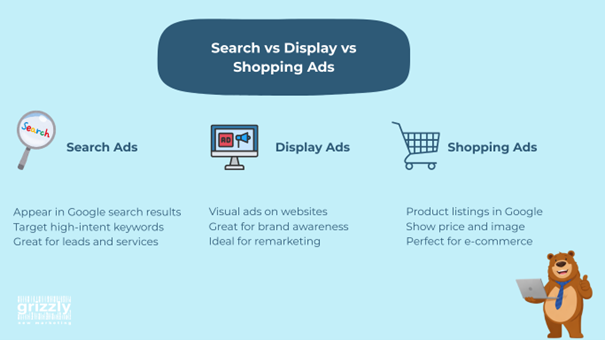
Google Ads offers multiple campaign types, and the three most commonly used are Search, Display, and Shopping campaigns. Each serves a different purpose and works best for different types of businesses and marketing goals. Understanding the differences can help you invest your advertising budget more effectively and generate better results, an essential advantage for businesses competing in the fast-paced world of online marketing in New York.

In this article, we explain how each campaign type works and how to choose the right one for your business.

Google Search Campaigns: Capturing Active Demand

Search campaigns are the most commonly used type of Google Ads campaign.

These ads appear directly in Google’s search results when users type in specific keywords.

For example, when someone searches for:

  • “digital marketing agency near me”
  • “buy running shoes online”
  • “plumber in Chicago”

Businesses running Search campaigns can appear at the top of those results.

The main advantage of Search campaigns is intent. People searching on Google are often already looking for a solution.

This makes Search campaigns particularly effective for generating:

  • leads
  • phone calls
  • online purchases
  • website inquiries

Because users already have a clear need, Search campaigns often produce higher conversion rates than other types of advertising.

Search campaigns work best for:

  • service-based businesses
  • local companies
  • B2B services
  • businesses targeting high-intent keywords

If your goal is to capture people actively looking for what you offer, Search campaigns are usually the best starting point.

Google Display Campaigns: Building Brand Awareness

Display campaigns work very differently from Search campaigns. Instead of appearing in search results, Display ads appear across Google’s massive Display Network, which includes millions of websites, blogs, and apps. These ads are usually visual banners or image-based ads.

Display campaigns are particularly useful for:

  • increasing brand awareness
  • retargeting previous website visitors
  • staying visible to potential customers
  • reaching large audiences quickly

Unlike Search campaigns, Display ads target users based on interests, demographics, or browsing behavior, not just search intent.

For example, a Display campaign could target:

  • people interested in home renovation
  • visitors who previously visited your website
  • users browsing websites related to your industry

Display campaigns typically have lower cost-per-click than Search ads, making them useful for visibility and remarketing.

However, they often generate fewer direct conversions compared to Search campaigns.

Display campaigns work best for:

  • brand awareness
  • remarketing campaigns
  • visual products or services
  • businesses with longer buying cycles

Google Shopping Campaigns: Perfect for E-commerce

Shopping campaigns are designed specifically for online stores and e-commerce businesses. Instead of text ads, Shopping ads display product listings directly in Google search results.

These ads usually include:

  • product image
  • price
  • store name
  • product title

For example, when someone searches for “wireless headphones,” Google may show several product listings at the top of the page.

Shopping campaigns are highly effective because they show potential customers exactly what they are buying before they even click.

This leads to:

  • more qualified traffic
  • higher purchase intent
  • better conversion rates for product searches

Shopping campaigns require a Google Merchant Center account where your product catalog is uploaded and synced with Google Ads.

Shopping campaigns work best for:

  • online retailers
  • product-based businesses
  • stores with multiple products
  • competitive e-commerce markets

If you sell physical products online, Shopping campaigns can be one of the most profitable advertising channels available.

Which Campaign Type Should You Choose?

The right campaign type depends largely on your business model and marketing goals.

Here’s a simple guideline.

Choose Search campaigns if:

  • customers actively search for your services
  • you want to generate leads quickly
  • your business depends on high-intent traffic

Choose Display campaigns if:

  • you want to increase brand awareness
  • you want to retarget website visitors
  • you want visual advertising across websites

Choose Shopping campaigns if:

  • you sell products online
  • you want to showcase product images and prices
  • you run an e-commerce store

In many cases, the best strategy is actually a combination of these campaign types.

For example:

A business might use:

  • Search campaigns to capture demand
  • Display campaigns for remarketing
  • Shopping campaigns to drive product sales

This multi-channel approach allows businesses to reach customers at different stages of the buying journey.
Common Mistakes Businesses Make

When choosing Google Ads campaigns, many businesses make avoidable mistakes.

Some of the most common include:

  • running Display campaigns without remarketing strategy
  • targeting overly broad keywords in Search campaigns
  • poorly optimized product feeds in Shopping campaigns
  • sending ad traffic to irrelevant landing pages
  • not tracking conversions properly

Without proper optimization, even well-funded campaigns can waste a significant portion of the budget. This is why strategy, targeting, and continuous optimization are essential.

Why Strategy Matters More Than Budget

Many businesses believe success in Google Ads simply comes down to spending more money. In reality, strategy often matters more than budget size. Choosing the right campaign type, targeting the right audience, and optimizing your ads regularly can dramatically improve performance. Even businesses with smaller budgets can achieve strong results when campaigns are set up correctly and optimized over time.



Recent posts

How to Get the Most Out of Your Google Ads Budget

How to Get the Most Out of Your Google Ads Budget

Many small and medium-sized businesses believe that Google Ads only works if you have a big marketing budget. But that’s not true. With the right strategy, often supported by an experienced online marketing agency, even a modest budget can generate meaningful traffic,...

read more
5 Common Google Ads Mistakes to Avoid

5 Common Google Ads Mistakes to Avoid

Google Ads can be one of the most effective ways to generate traffic, leads, and sales for your business. When campaigns are set up correctly, they allow you to reach potential customers exactly when they are searching for products or services you offer. This is...

read more
Grizzly New Marketing is hand-picked by Google as a SMB Partner. Grizzly works closely with businesses to help grow and maximize online campaign performance.

F. van de Peppel, Strategic Partnership Development Team at Google for Northern Europe   Google premier partner logo